
Despite the demonetisation of 2016 and the rise in digital transactions that followed, the economy's dependence on cash has remained as high as ever. So when the Reserve Bank of India (RBI) introduced a pilot project of its version of digital cash - called the central bank digital currency (CBDC) - on December 1, many questions were asked. Can the CBDC replace physical cash, even partially? Can it match cash in terms of convenience? Are CBDC transactions truly anonymous?

Indian kiranas are agile enough to face the q-com challenge, but it's going to be a tough fight, notes Ambi Parameswaran.

'Dear Business Partner, Kindly note and inform your all customers that Digital Cashback has been revised from 0.75 per cent to 0.25 per cent with effect from August 1, 2018 across oil industry for all loyalty customers,' said the text message sent by State-owned oil companies to petrol pump operators.

The temptation to get into businesses that are hot is perhaps too great for any politician, no matter what his public slogans are. Nehru plunged into hot sectors of his time -- engineering and iron and steel. Modi has plunged into digital payments -- the hot sector of his time, notes Debashis Basu.

'The focus needs to shift towards the ability to collect payments, particularly in tier-3 to tier-4 areas where acceptance is still lacking.'

Poor earnings show in the September quarter (Q2FY24), with hints of likely weakness in asset quality going ahead, forced analysts to cut earnings estimates of SBI Cards and Payment Services (SBI Card). On the bourses, shares of the State bank of India arm tumbled 7.4 per cent to Rs 732 apiece on the BSE in the intraday trade as investors factord in near-term concerns. Analysts at Motilal Oswal Financial Services, for instance, slashed SBI Card earnings by 8 per cent and 10 per cent for FY24 and FY25, respectively, as they expect the company to face pesistent magin pressure.

In the excitement over the allocation of bank licences for the private sector, a new category of licence offered by the Reserve Bank of India (RBI) last year went almost unnoticed. That was when the RBI consolidated the rules for prepaid payment instruments (PPI), popularly understood as e-wallets or gift cards. In the process, the regulator has fast-forwarded a bottom-up card usage industry in India that is completely different from the world of bank-linked credit and debit cards.

The Bharat Interface For Money app was launched on the iOS platform earlier this month. It is also available on the more popular Android platform. There have been over 17 million downloads of the BHIM app so far.

Tripti Rai explains the unique features of Bharat Interface for Money (BHIM) app developed by the National Payment Corporation of India.

When Open Network for Digital Commerce (ONDC) was conceived last December, the idea was to reduce the dominance of e-commerce giants like Amazon and Flipkart. It was also to bring in a level-playing field for small merchants in India's fragmented but fast-growing $1-trillion retail market. However, those goals have changed now as large e-commerce players such as Flipkart, Amazon and Ecom Express are in various levels of talks with the ONDC team. They want to form partnerships like integrating with the network as well as providing their expertise to build it, according to the industry sources.
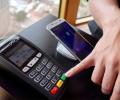
For those who are sceptical about using debit or credit cards, even when faced with cash crunch, Adhil Shetty, CEO of BankBazaar.com, lists out a few safe cashless options that can be exercised through mobile phones.
